局部搜索
- 一开始就给所有变量赋值(即使违反约束)
- 在其解空间的领域内寻找更好的解(迭代改进Iterative Improvement)
- 需要一个评估函数对状态打分
- 直到满足终止条件
通用的框架
def local_search(initial_solution, max_iterations=1000):
    """
    局部搜索通用框架

    Args:
        initial_solution: 初始解
        max_iterations: 最大迭代次数

    Returns:
        找到的最优解
    """
    current_solution = initial_solution
    current_value = evaluate(current_solution)

    for i in range(max_iterations):
        # 1. 生成邻域
        neighborhood = generate_neighbors(current_solution)

        # 2. 评估邻域中的解
        best_neighbor = None
        best_neighbor_value = current_value

        for neighbor in neighborhood:
            neighbor_value = evaluate(neighbor)

            # 寻找比当前解更好的邻域解
            if neighbor_value > current_value:  # 假设是最大化问题
                best_neighbor = neighbor
                best_neighbor_value = neighbor_value

        # 3. 如果找到更好的解,则移动
        if best_neighbor is not None:
            current_solution = best_neighbor
            current_value = best_neighbor_value
        else:
            # 达到局部最优,停止
            break

    return current_solution, current_value
在领域内寻找可能陷入局部最优,内存小速度快
对于N-Queen问题,如果使用类似的方法,随机初始状态,然后选择不满足的变量,移动到违背约束最少的地方,大约能解决n~10 000 000的N-Queen问题
根据R = number of constraints / number of constraints,这种方法需要的时间会有很大不同
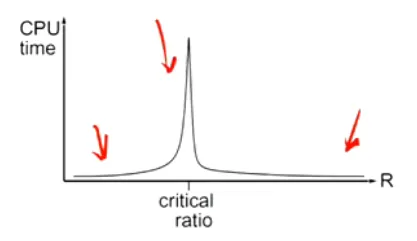
在约束很少的时候,一开始的随机赋值很可能就很接近答案;约束很多的时候,很容易调整那些不满足的变量达到最优(可以结合梯度下降法的函数图像理解)
爬山算法 Hill Climbing
def hill_climbing(initial_solution):
    """
    最陡上升爬山法 Steepest-Ascent Hill Climbing
    总是选择邻域中最好的解
    """
    current = initial_solution
    current_value = evaluate(current)

    while True:
        neighbors = get_neighbors(current)

        # 找到最好的邻居
        best_neighbor = None
        best_value = current_value

        for neighbor in neighbors:
            neighbor_value = evaluate(neighbor)
            if neighbor_value > best_value:
                best_neighbor = neighbor
                best_value = neighbor_value

        # 如果没有更好的邻居,停止
        if best_value <= current_value:
            return current, current_value

        # 移动到更好的解
        current = best_neighbor
        current_value = best_value
生成所有邻居之后,选择评估函数结果最好的一个,转移状态
但是邻居可能有很多个,为了降低找到最优的计算量,也有随机爬山法 Stochastic Hill Climbing,只要找到比当前状态更好的就直接转移
模拟退火 Simulated Annealing/SA
为了逃离局部最大值,可以对爬山算法取不同的初始值进行(重启)
也可以,引入一个温度参数。随机选择一个邻居并评估,如果更优就选择,但是如果更差,在温度高的时候,也可能会选择移动,温度越高可能性越大;温度越低,表现越接近爬山
def simulated_annealing(initial_solution, initial_temp=1000, cooling_rate=0.95, max_iterations=1000):
    """
    模拟退火算法

    Args:
        initial_temp: 初始温度
        cooling_rate: 冷却率 (0 < rate < 1)
    """
    current = initial_solution
    current_value = evaluate(current)
    best = current
    best_value = current_value

    temperature = initial_temp

    for i in range(max_iterations):
        if temperature < 0.01:  # 温度足够低时停止
            break

        # 随机选择一个邻居
        neighbor = random.choice(get_neighbors(current))
        neighbor_value = evaluate(neighbor)

        # 计算能量差 (假设最小化问题)
        delta = current_value - neighbor_value

        if delta > 0:
            # 新解更好,接受
            current = neighbor
            current_value = neighbor_value

            # 更新全局最优
            if neighbor_value < best_value:
                best = neighbor
                best_value = neighbor_value
        else:
            # 新解更差,以一定概率接受(Metropolis准则)
            probability = math.exp(delta / temperature)
            if random.random() < probability:
                current = neighbor
                current_value = neighbor_value

        # 降低温度
        temperature *= cooling_rate

    return best, best_value
如果温度下降的速度足够慢,这个算法保证optimal,但是实际上这是不可能的
遗传算法 Genetic Algorithms/GA
略